Digit Delight
Homage to Rene Lavand

A legendary magician noted for close-up performance with one hand, Rene Lavand is revered for amazing technique along with an engaging demeanor. Many of the sleights Rene executed were original or modified out of necessity.
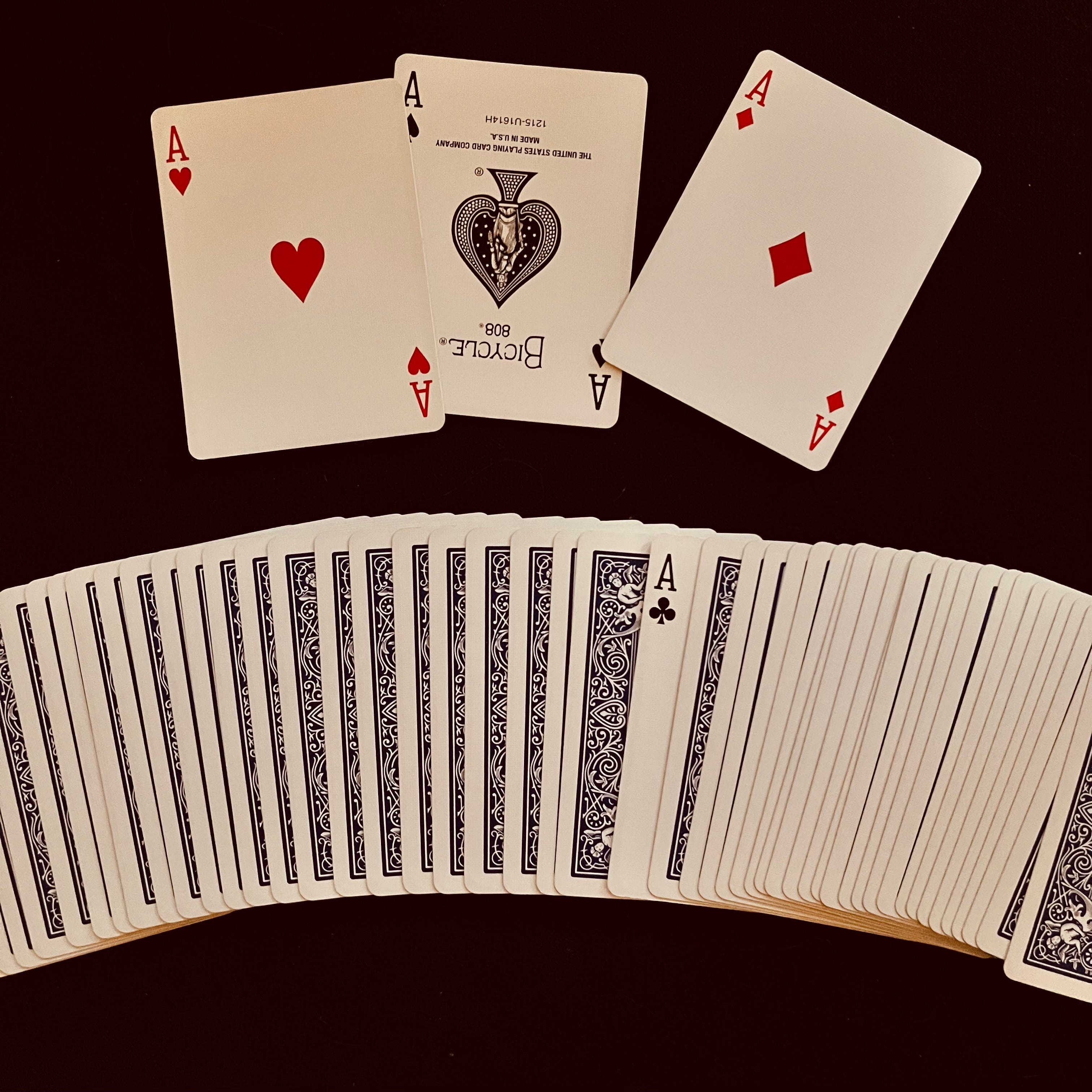
A presentation idea that helps lessen the perception of “showing off” when performing a few fancy one hand shuffles and cuts: Mix the cards and produce four aces with one hand as a tribute to Rene Lavand. The following clip shows Rene Lavand on the The Ed Sullivan Show performing a Triumph effect and One Hand Ace Cutting.
Using Rene’s interpretation of the classic Vernon routines as inspiration, and to eliminate the need to remove the Aces before losing and then finding and revealing the aces again, a different approach, using an ordinary deck with no crimps, is to begin with the Aces secretly on top of the deck as you begin to talk about Rene Lavand.
Produce three Aces after shuffling and cutting the deck with one hand, and then finish with a slop shuffle style “Triumph” revealing the last Ace face-up in a face-down table spread.
Lavand’s routines and techniques have been published, and you are strongly encouraged to seek out and learn, or use your own favorite shuffles, slip cuts and techniques, keeping in mind to use only one hand to perform the entire routine. For your consideration, the following procedures may help get you started:
Begin with a one-hand shuffle - click on video above- retaining a stranger card and Aces on top of the deck. This technique is published in many books and videos.
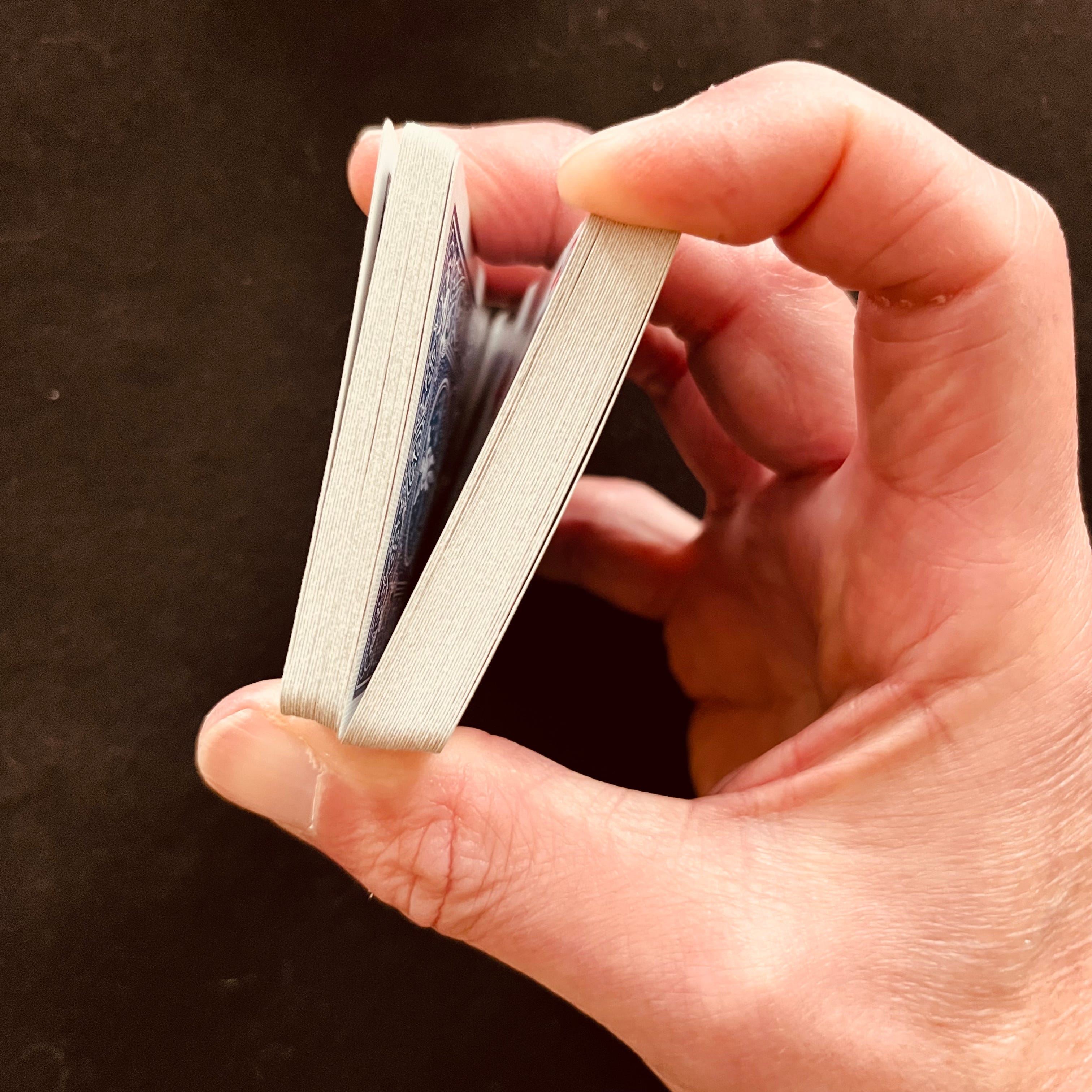
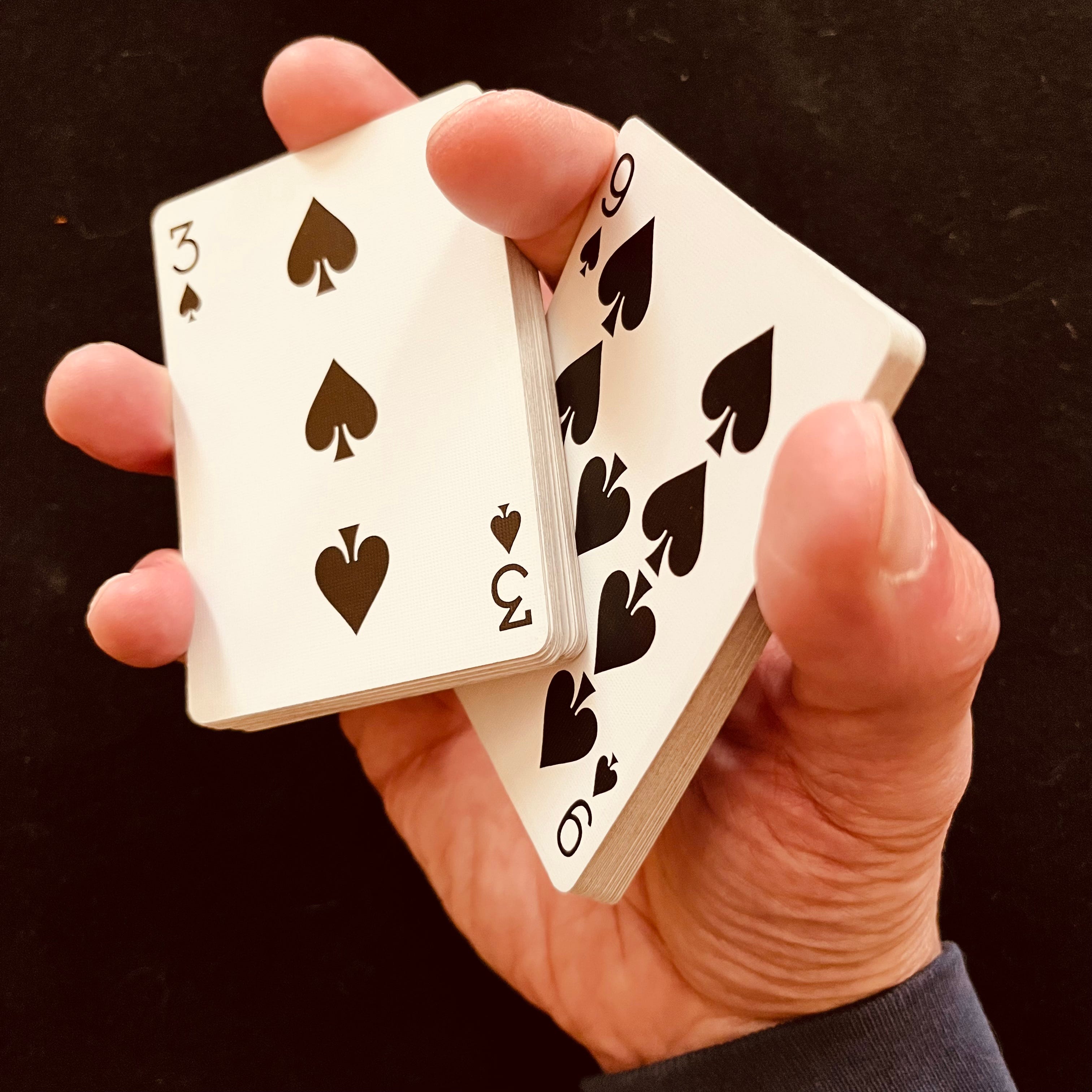
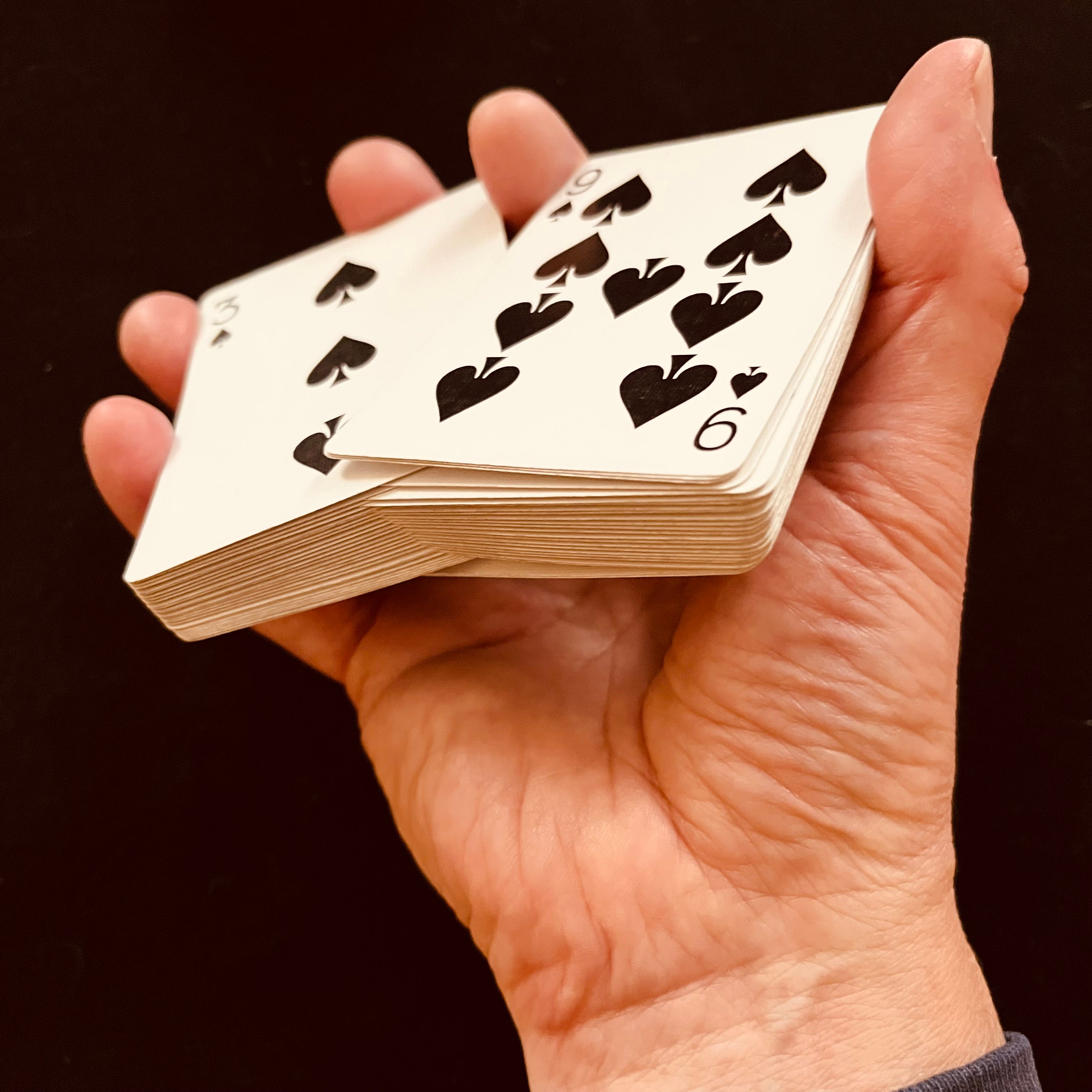
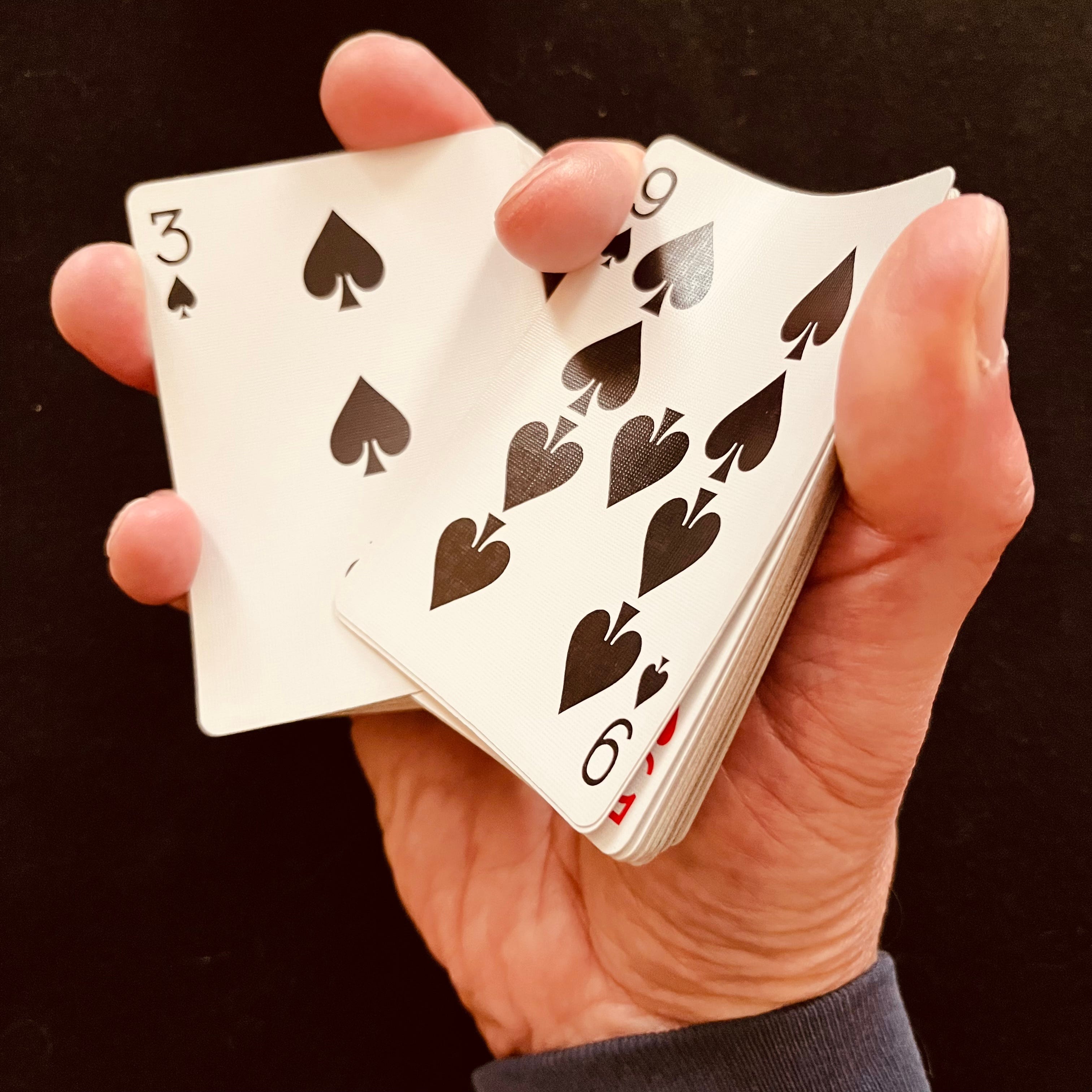
Perform a simple face-down table spread and turnover, being careful not to expose the Aces. Immediately gather the cards and square up the cards face down.
Pick up the top card and show “no Ace on top”, and return, then pick up the deck, “no Ace on the bottom…” and begin a swing cut as your show the bottom cards. Lower the deck and execute a slip cut, carrying the stranger card with the bottom half of the deck to the table, and then pick up and show the top Ace from the other half on the table. Refer to Lavand’s sophisticated technique for slip cutting to the first Ace.
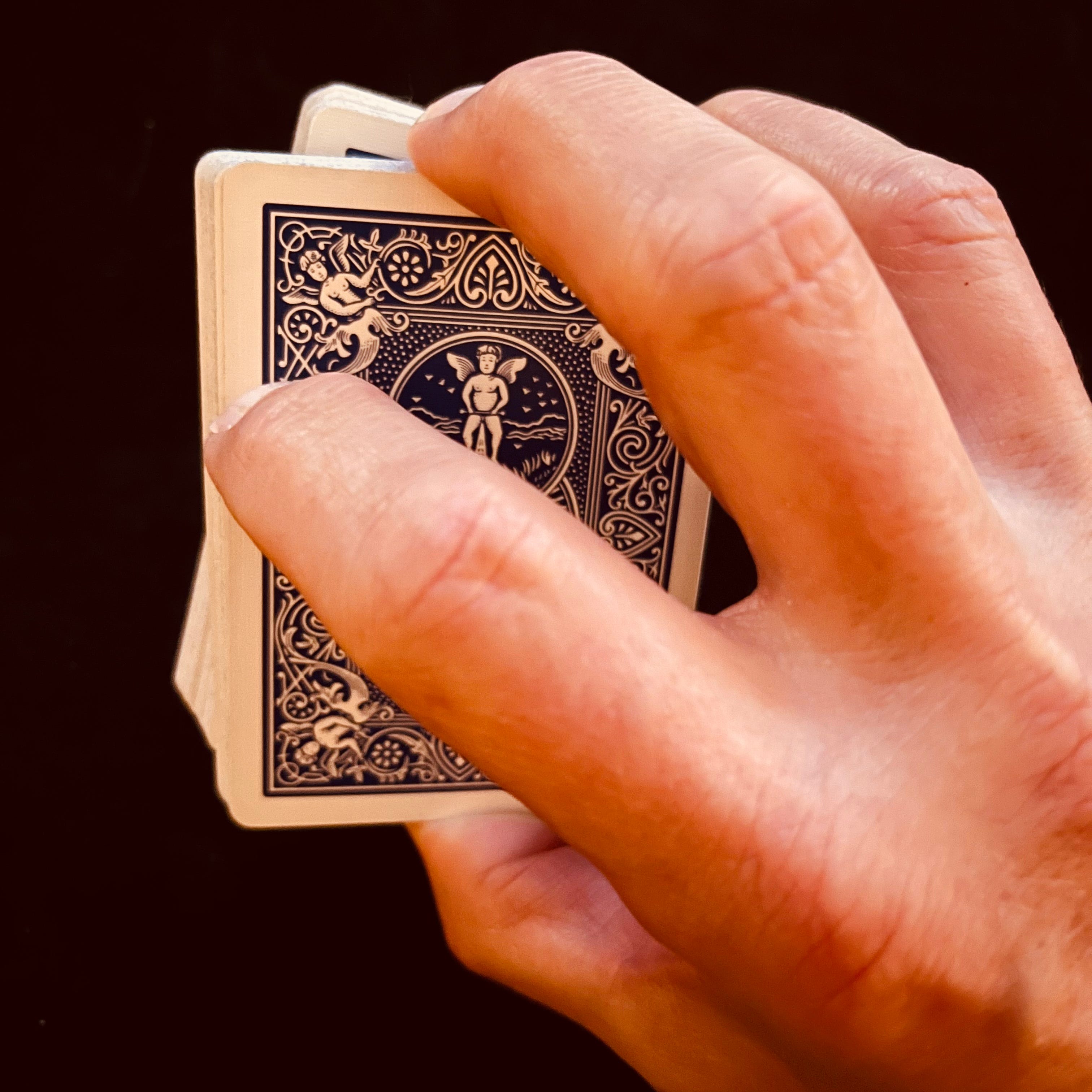
A one hand slip cut can be difficult to perform smoothly and deceptively. An alternative is to execute a one hand double or triple undercut as follows:
Cut two-thirds of the deck to the table and then one-third of the deck, carrying the Aces and stranger card. Pick up the bottom potion and place on top of middle portion, and then pick up and place on the top portion of the deck, keeping a slight thumb break as you drag the cards back to the original table position.
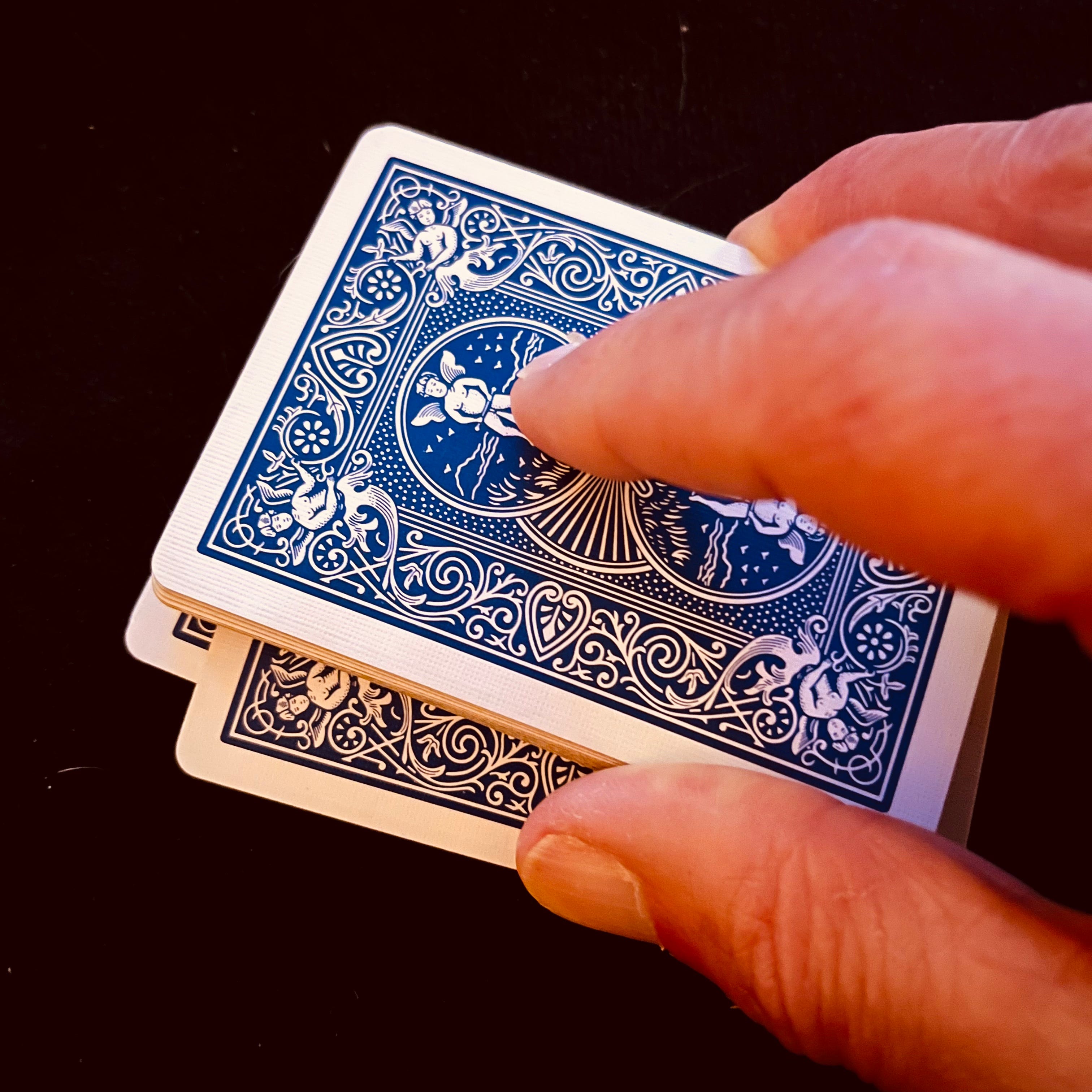
The side of the thumb drags out and picks up the top card from the bottom pack as you square up the cards - the stranger card- and cuts the deck to the table, completing the cut. Pick up the top card and show the Ace.
Another approach is to eliminate showing the top and bottom cards, instead, begin the routine with four Aces on top of the deck, shuffle and execute the triple undercut, secretly ending with one Ace on the bottom of the deck as you reveal the top card as the first Ace.
The second Ace is revealed as you execute a modified John Guastaferro “Ballet Cut”on the table. The Ballet Cut is simple, yet very deceptive, and is typically performed in the hands.
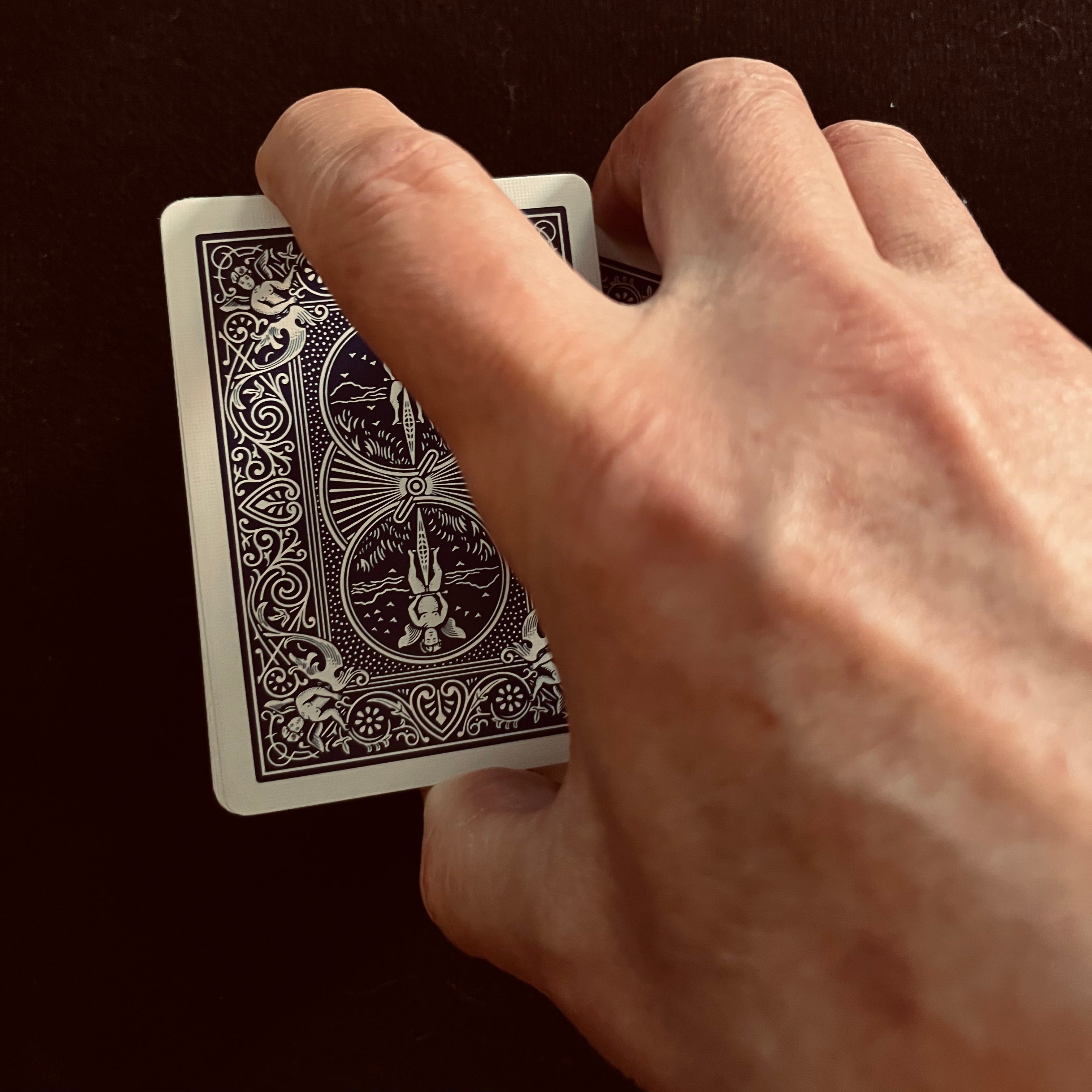
Pick up the deck just a few inches off the table and with the first finger swing cut the top half to the left, revolving the cards face up onto the table.
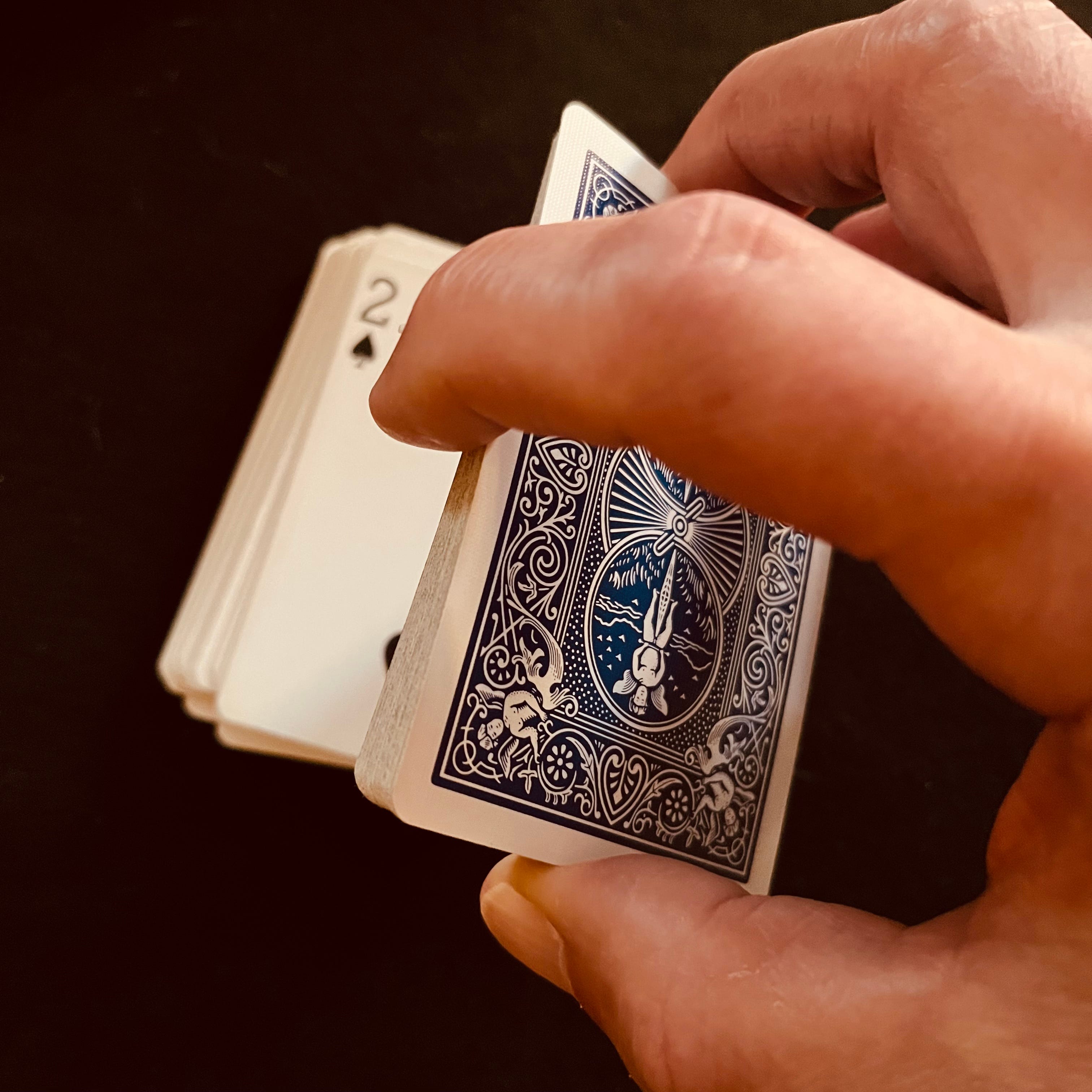
In a continuing action, the first finger reaches below the left side of the face-down cards in the hand, revolving the cards face-up onto the top of the tabled cards, revealing the second Ace.
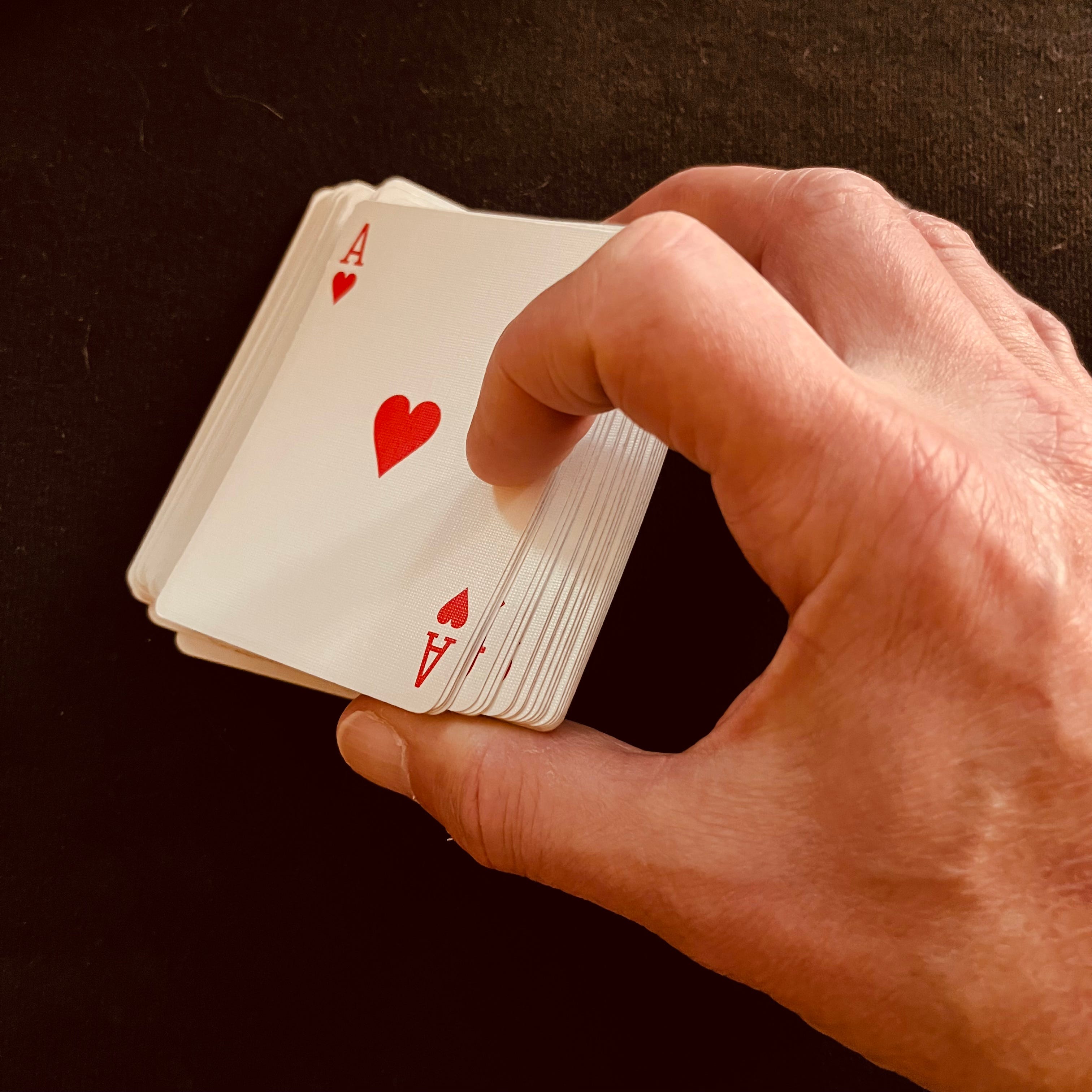
Remove the Ace and repeat the same action with the tabled deck face-down. Complete the cut, pick up the top card and reveal the third Ace and set aside.
The final Ace is revealed using the slop shuffle Triumph as performed by Lavand. The one-hand shuffle is executed as you explain that you will also mix the cards further with a “Chicago south-side slop shuffle”. This requires the Ace on top of the deck to be cut to bottom as described earlier.
Reverse table spread the face-down deck and begin to pick up small blocks of cards, revolve the cards, and slap the cards face-up onto the balance of the table spread.
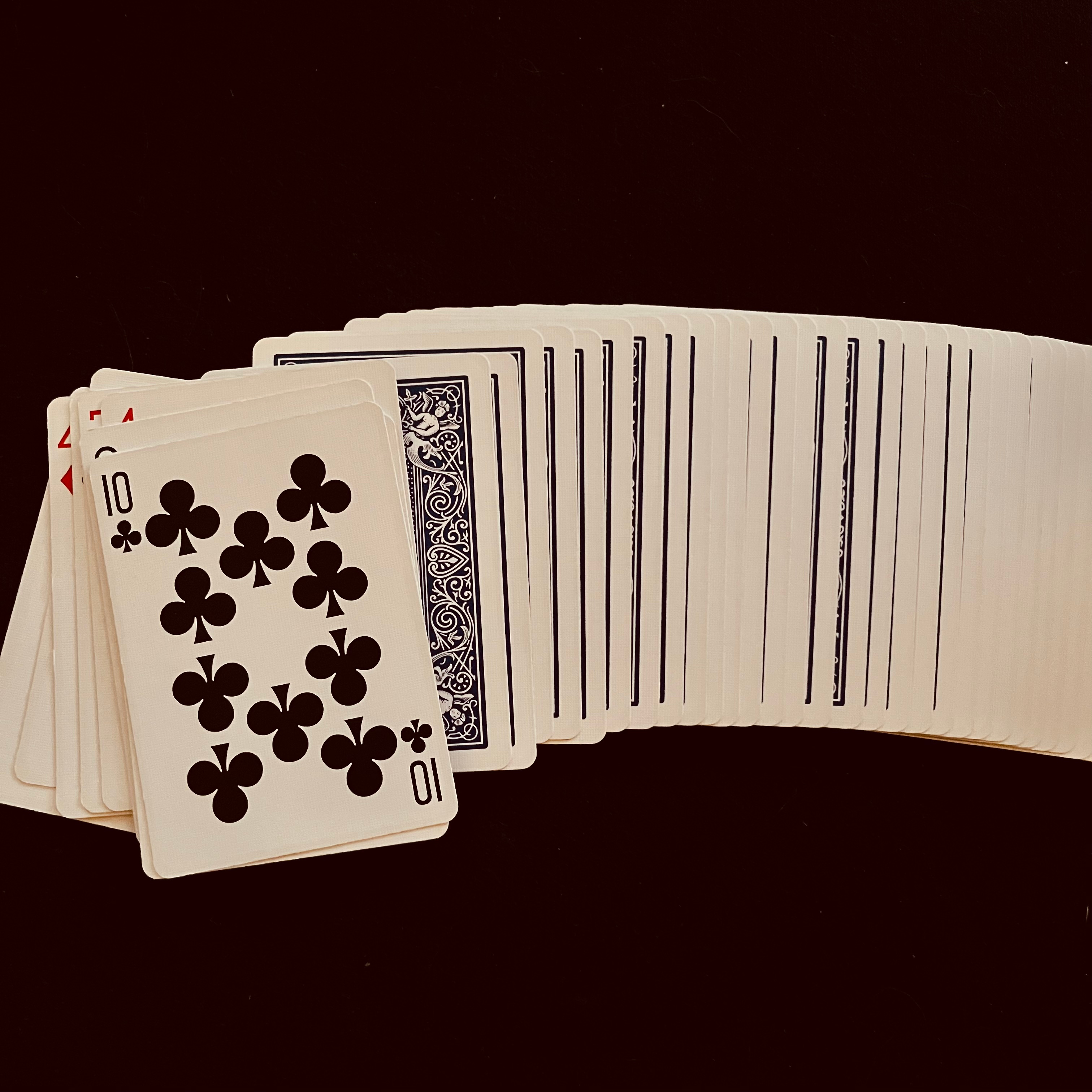
Repeat the action several times by picking up a bigger block of face-up and face-down cards, revolve and slap back onto the table spread. What looks like a mess is actually one block of face-up cards on top of one block of face-down cards. Study the performance video for further details.
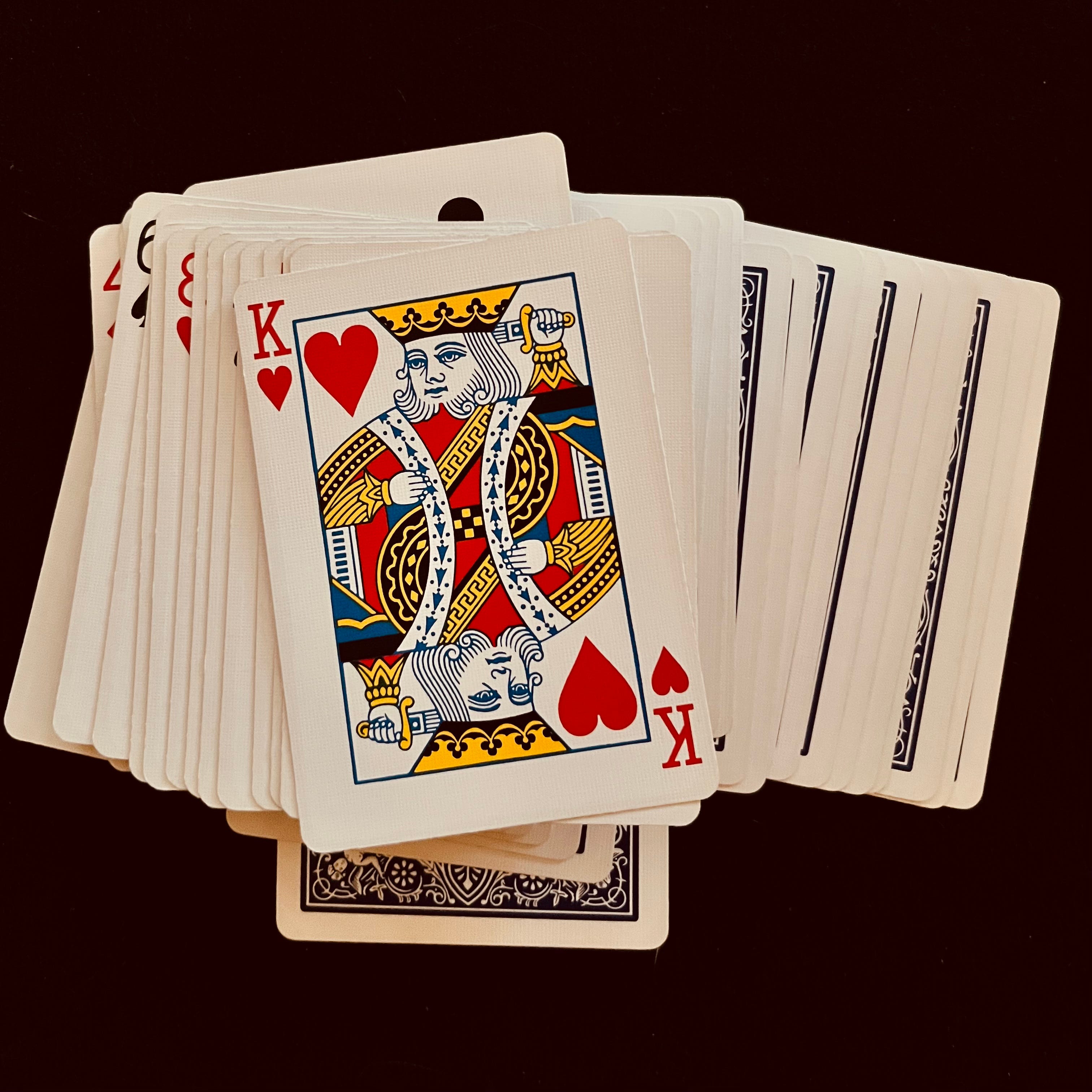
The bottom card of the face-down bottom half is the Ace. Cut the face-up block of cards to the table. As you grab the bottom half of the deck to complete the cut, slide the cards forward and back, creating a break above the Ace.
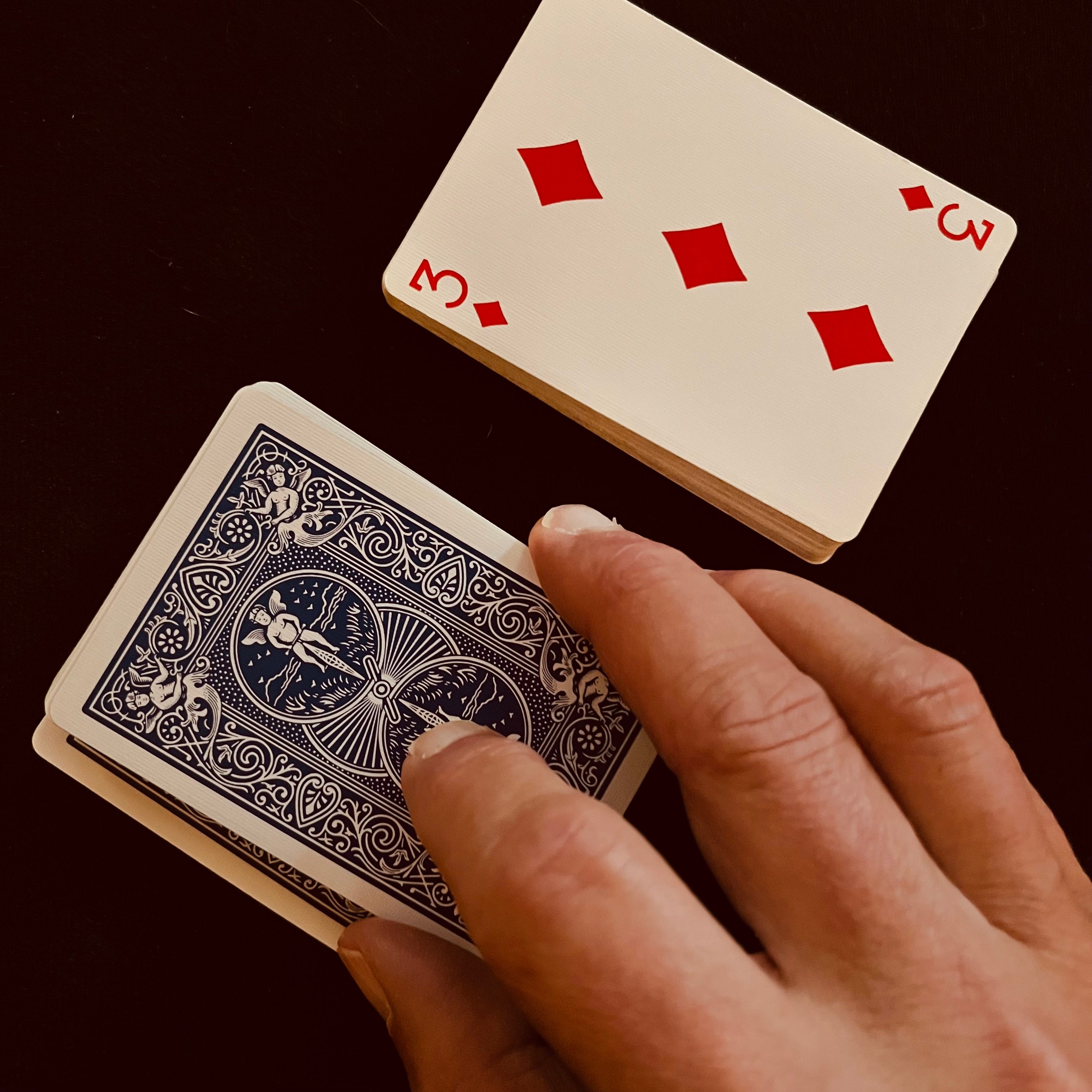
Place the face-down half on top of the face-up half and immediately release the break and cut the cards to the table and then complete the cut.
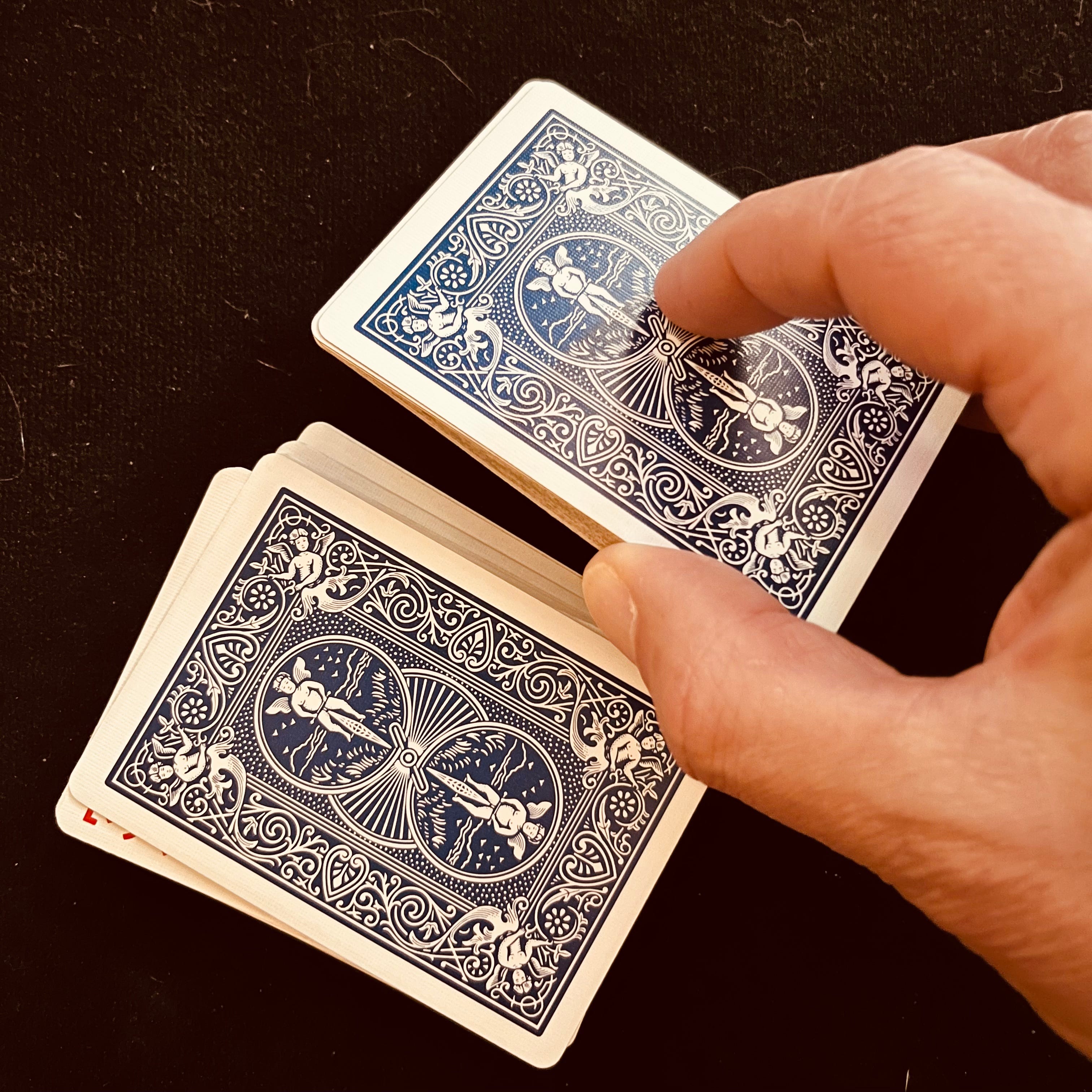
The top card is the face-down Ace, followed by the face-up block on top of the face-down block. Lift about one-third of the cards to display a random face-up card, close the cut. Lift up two-thirds of the deck to display a random face-down card and close the cut.
Cut at the natural break between the face-down block and face-up block, displaying a face-down card on the bottom of the top block. Flip the top block as you close the cut.
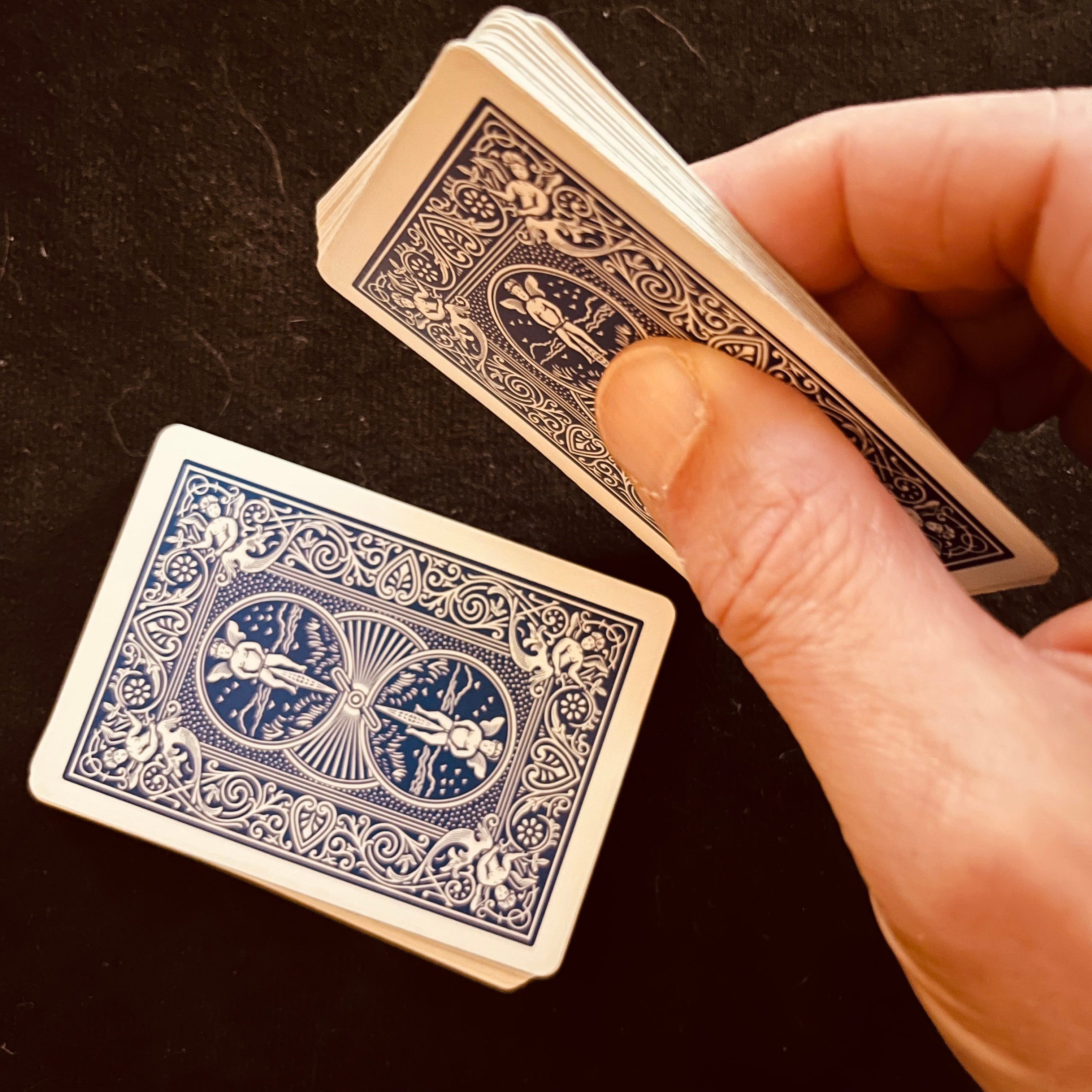
Conclude with a slow face-down table spread to reveal the face-up, and final Ace.